

Heavy-Duty Galvanized Iron Wire for Construction & Industrial Use



Heavy-Duty Galvanized Iron Wire for Construction & Industrial Use
Feature
-
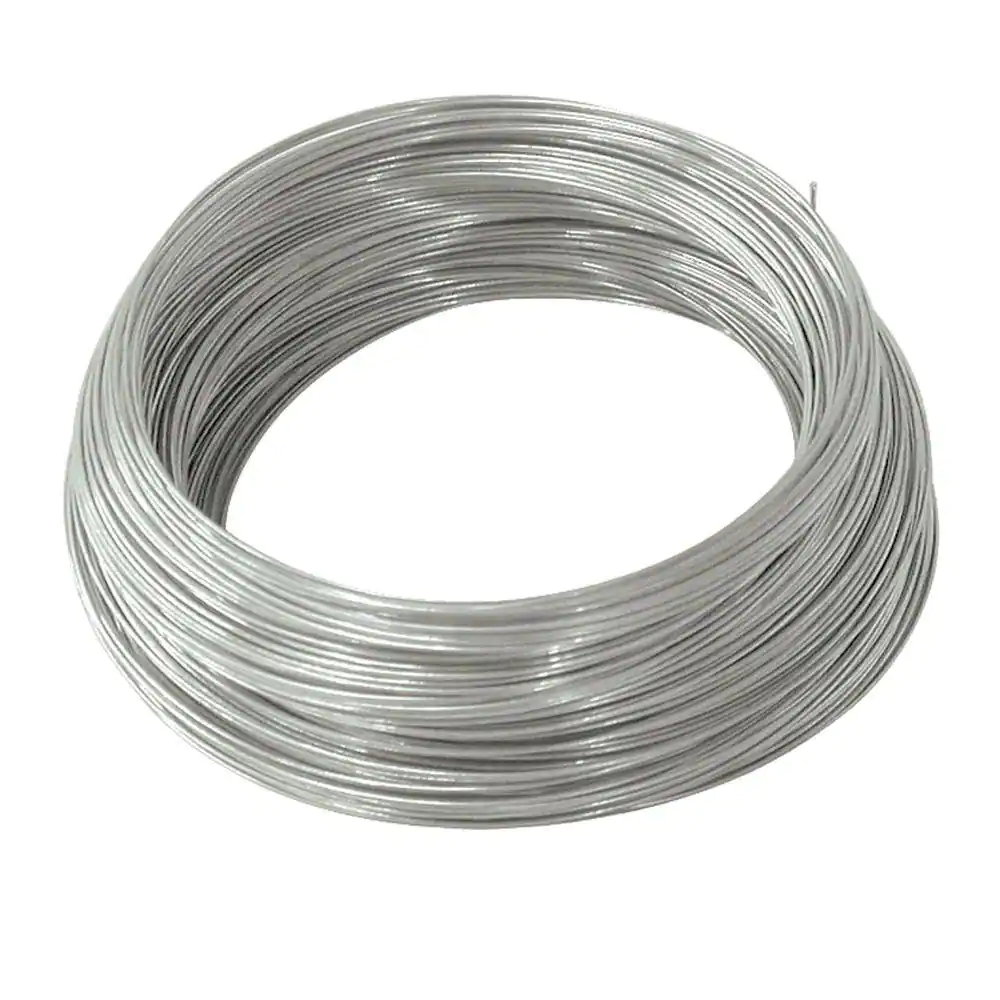
Galvanized steel wire (commonly referred to as GI wire) is a robust and long-lasting material, produced by coating high-strength steel wire with a protective layer of zinc. This galvanization process effectively shields the wire from rust and corrosion, extending its service life across various demanding industrial environments. Available with a diameter of 3.6mm, this wire is engineered to deliver exceptional tensile strength and dependable performance.
1)Grade: Q195/Q235b, 45#, 55#, 60#, etc.
2)Wire diameter: 3.6mm, 4.6mm, all sizes are available
3)Zinc coating: 15g/m2-600g/m2
4)Tensile Strength Range: 290MPa-1200Mpa
5)Packing: according to per customer's request
5kgs/roll, 25kgs/roll, 50kgs/roll, pp film inside and hessian cloth outside or pp woven bag outside


1.Outstanding weather resistance and environmental adaptability
Comprehensive protection: The zinc layer provides physical isolation and electrochemical protection for the steel wire, effectively resisting rain, moisture, ice and snow, as well as salt fog corrosion, and is suitable for long-term outdoor exposure and temperature variation environments.
Chemical stability: The zinc coating has excellent resistance to common industrial corrosive media (such as weak acids, alkalis, and sulfur-containing atmospheres), and is suitable for special environments such as chemical industrial zones and coastal facilities.
2. Remarkable durability and economy
Extended lifespan: Compared to ordinary galvanized iron wire, galvanized steel wire can increase its service life by several times, reducing the risk of breakage due to rust and lowering the frequency of replacement and maintenance costs.
Strength retention: In products with typical specifications such as a 3.6mm diameter, the core steel wire maintains high mechanical properties. The zinc coating does not reduce its tensile strength and load-bearing capacity, ensuring structural safety.
3. Extensive application flexibility
Multi-functional applicability: It can be used in various scenarios such as binding, hanging, fence construction, structural reinforcement, agricultural production support, etc., balancing functionality, aesthetics, and industrial practicality.
Processing friendliness: Exhibits excellent flexibility and weldability (local treatment required), supports secondary processing such as cutting, weaving, and shaping, and is suitable for diverse engineering requirements.
4. Sustainability and Environmental Characteristics
Green Process: The hot-dip galvanizing process adheres to the principles of circular economy. The zinc coating can be recycled, and the production process is controllable in terms of pollution.
Reduce consumables: The long-life feature reduces material consumption and waste generation, supporting sustainable engineering projects and resource conservation.

1.Construction Engineering and Structural Reinforcement
Concrete Reinforcement: In cast-in-place concrete projects, galvanized steel wires are commonly used to make binding bars, structural bars, and reinforcement meshes for lightweight concrete, effectively enhancing the crack resistance and overall durability of the structure.
Temporary support and fixation: Suitable for the fixation of scaffolding safety nets, construction barriers, bundling of pipelines, and connection of templates. Its weather resistance is adapted to the environmental changes in outdoor construction sites.
Prestressed components: Galed steel wires that have been strictly processed to meet standards can be used in some prestressed concrete structures, providing long-term protection against corrosion.
2. Fence Protection and Boundary Definition
Protection fence: Widely used for the production of wave-shaped guardrail nets, woven nets and barbed wire around highways, industrial parks, farms and public facilities.
Safety isolation: In mines, power facilities, and storage areas, it is used as a protective fence or isolation net. Its high strength and corrosion resistance ensure long-term safety protection effects.
Livestock and garden fences: The galvanized coating can resist corrosion from outdoor moisture and animal environments. It is commonly used for pasture fences, orchard protective nets, and garden decorative fences.
3. Support for Agricultural Production and Horticulture
Crop cultivation system: Used for supporting trellis-type crops such as grapes, tomatoes, and cucumbers, providing a stable and rust-resistant traction structure.
Livestock facilities: Suitable for building livestock enclosures, fixing feed troughs, and installing poultry coop grids, etc. They balance durability and animal safety.
Greenhouse and greenhouse structure: As the key material for securing the greenhouse film, connecting the arch frames, and forming the internal suspension system, it is designed to withstand the humidity and chemical exposure in agricultural environments.
4. Industrial Strapping and Packaging Fixation
Heavy-duty Strapping: In logistics, warehousing, and transportation, galvanized steel wires of 3.6mm or larger can be used to secure large machinery, steel pipes, wood, and building materials.
Packaging reinforcement: Suitable for internal fixation of containers and bundling of palletized goods, providing high tensile strength and rust protection.
Ship and vehicle manufacturing: Used in shipbuilding and carriage manufacturing for internal structure fixation, pipeline bundling, and component connection.
5. Public Facilities and Daily Applications
Municipal Engineering: Used for fixing road sign posts, supporting greenery structures, and connecting public seats, etc., for outdoor facilities.
Home and DIY applications: Suitable for repairing garden fences, creating garden designs, building shelves, hanging household tools, and other daily scenarios.

Application
As China metal materials industry leading enterprises, the national steel trade and logistics "Hundred good faith enterprise",China steel trade enterprises, "Top 100 private enterprises in Shanghai”. Shanghai Zhanzhi industry Group Co., Ltd.,(shorted to Zhanzhi Group) takes the" Integrity, Practicality, Innovation, Win-Win " as its sole operation principle, always persist in putting the customer demand in the first place.
- INTEGRITY
- WIN-WIN
- PRAGMATIC
- INNOVATION