
Both welded steel and seamless steel pipes are particularly common in the fields of construction, energy, machinery, oil & gas, and fluid transportation. Their differences are mainly in the production process, pressure carrying capacity, size availability and cost.
1. Process of production
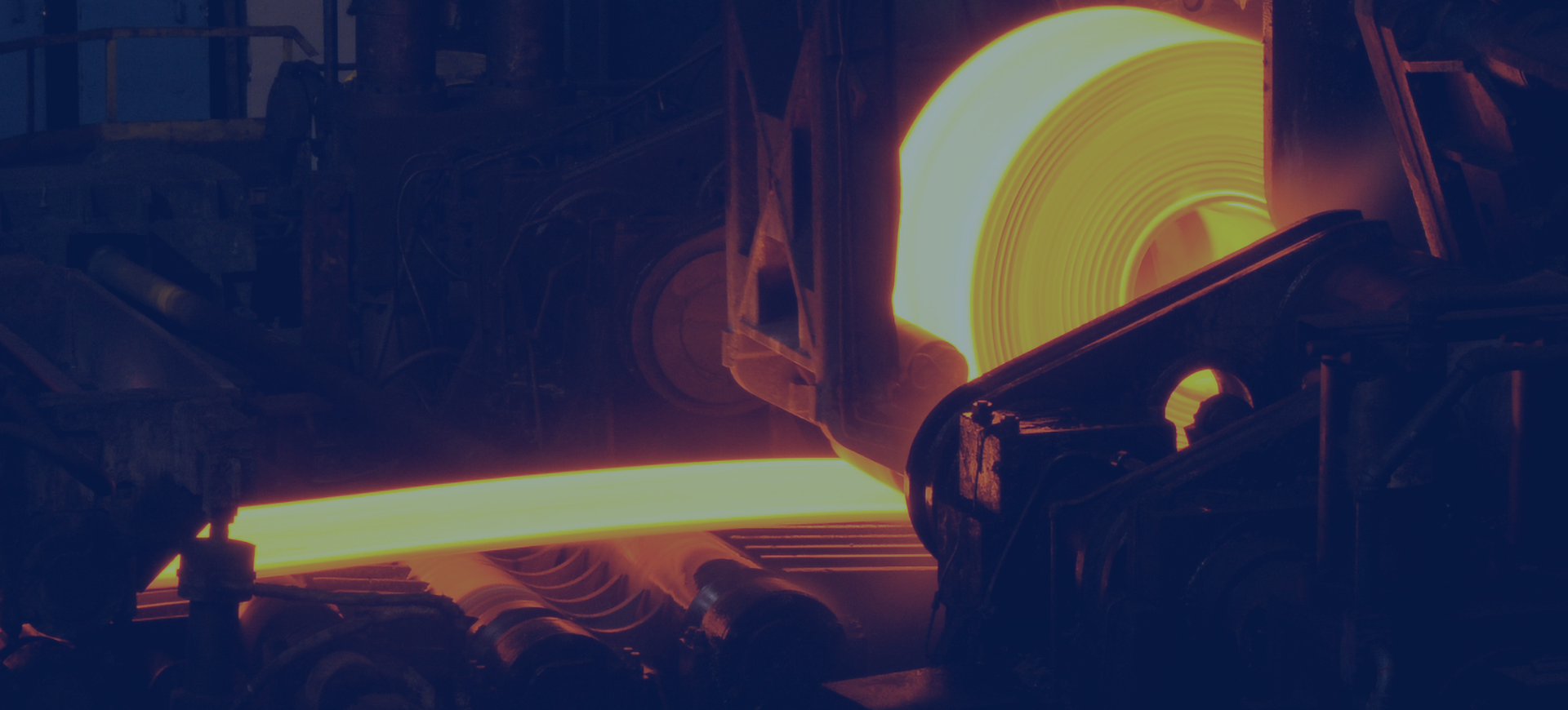
A seamless pipe is produced from a solid round steel billet. The billet is heated, punched and rolled or cold drawn to make a hollow pipe. Because it’s produced in one solid piece, it doesn’t have a welded seam.
Welded steel pipe is produced by rolling and welding the steel plate or steel strip. The majority of welded pipes have a longitudinal seam, but a few large diameter pipes are produced with a spiral seam.
2. Main Performance Differences
| Item | Seamless Pipe | Welded Steel Pipe |
|---|---|---|
| Pressure resistance | Suitable for high-pressure, high-temperature, and critical applications | Commonly used for low- and medium-pressure systems |
| Structural integrity | No weld seam, providing continuous pipe structure | Weld quality directly affects performance |
| Wall thickness | Suitable for thick-wall pipes, but tolerances may be larger | More uniform wall thickness and higher dimensional accuracy |
| Surface finish | Inner surface may contain rolling marks or oxide scale | Inner surface can be smoother after weld finishing |
| Diameter range | Mainly used for small and medium diameters | Suitable for thin-wall and very large-diameter pipes |
| Cost | Generally more expensive | More economical and efficient for mass production |
3. Typical Seamless Pipe Applications
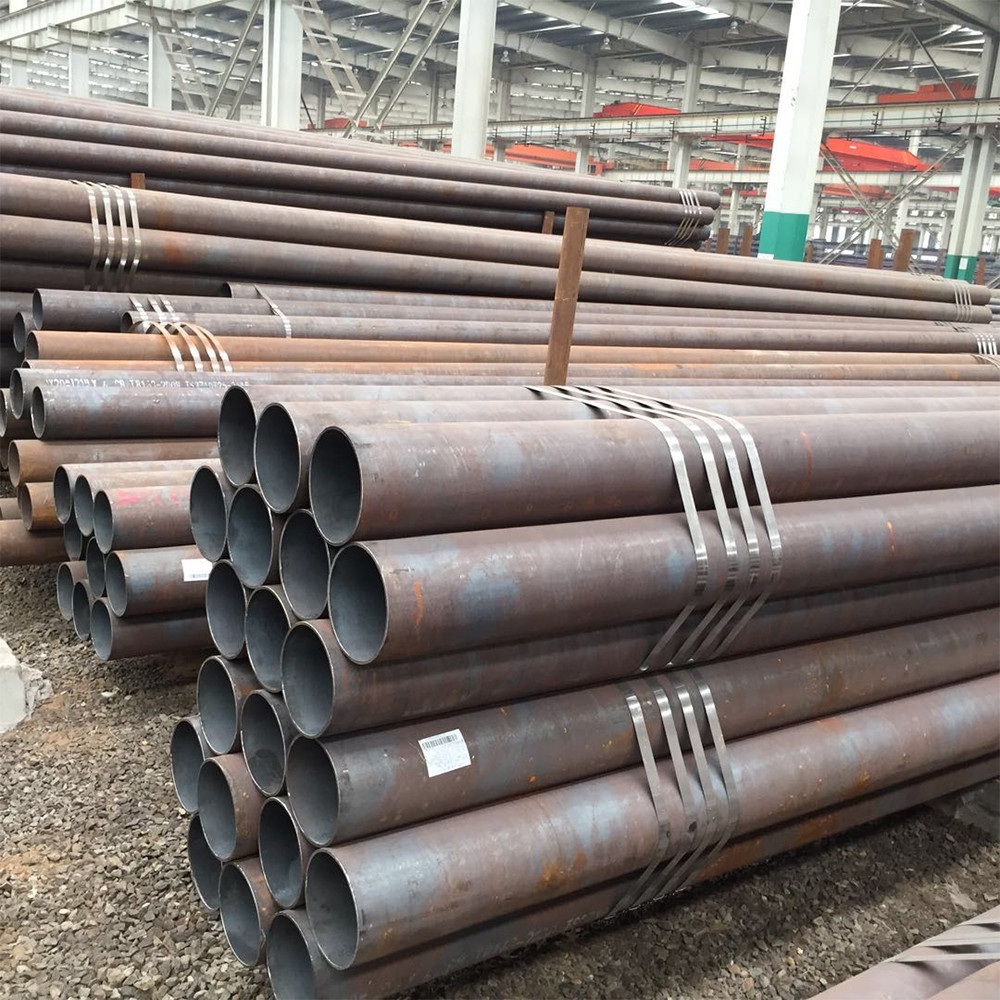
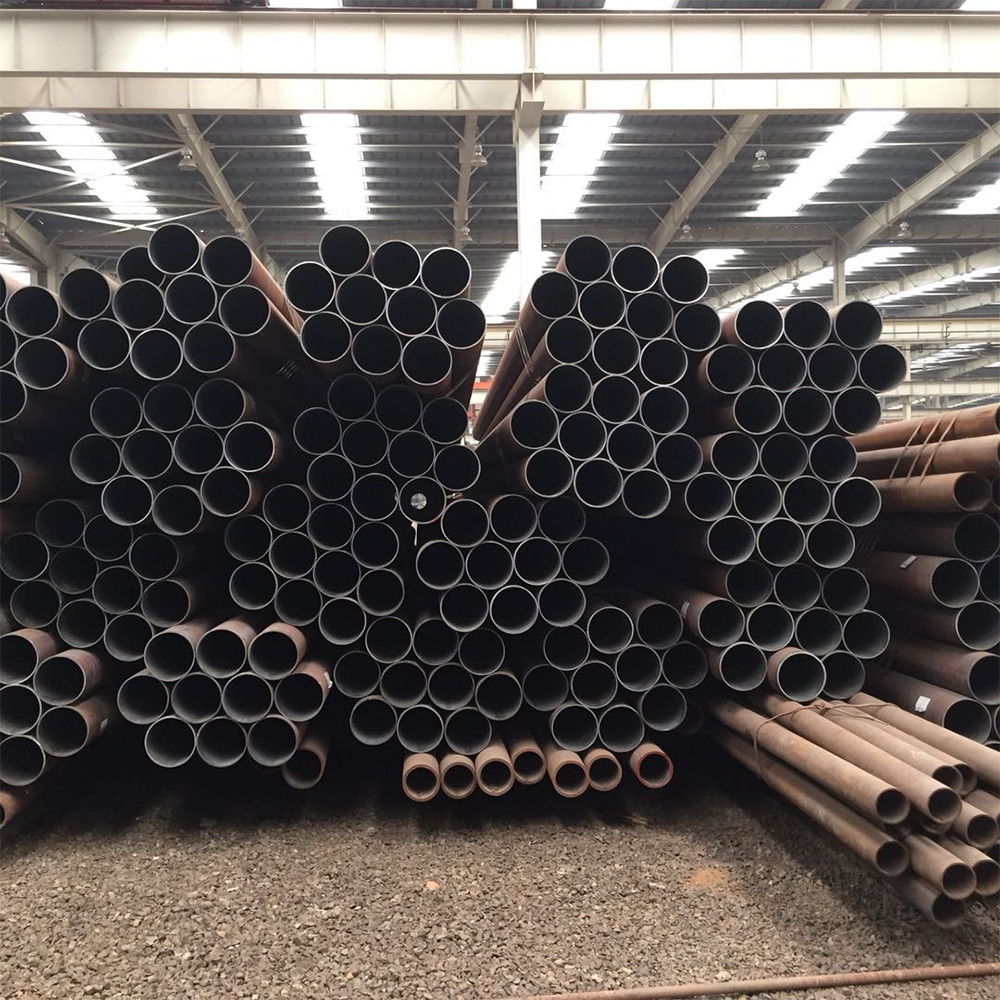
A seamless pipe or seamless steel tube is typically used for high pressure, high temperature, corrosive, or critical to safety applications.
Seamless tubes are widely used in mechanical engineering and in the manufacture of automotive components and heavy machinery, ensuring components can operate at maximum efficiency while abiding to strict safety codes.
When high dimensional accuracy, good surfaces and reliable mechanical properties are required, the cold-draw seamless tube is also used extensively.
4. Typical Welded Steel Pipe Applications
The cost of the welded pipe is cheaper than comparable sizes of stainless seamless pipe, so that welded pipe is widely utilized in the low pressure fluid transportation, architectural fabrication, large diameter pipe line and the project with cost sensitive one.
- Water supply, drainage, sewage
- Cosmopolitan pipelines and cable protection pipes
- Low pressure gas distribution
- Scaffolding and steel structures
- Greenhouse frames, fences, and guardrails
- Furniture and fitness equipment
- Artificial stainless steel tubes
- Ventilation and low pressure compressed air systems
Spiral welded and longitudinal submerged arc welded pipes are very applicable used in large diameter and long distance pipe line projects.
5. Simple Selection Guide
High pressure, high temperature, hazardous media, or strict leakage requirements → Choose seamless pipe
Low-pressure service, structural use, large diameter, or limited budget → Choose welded steel pipe
Some welded pipes are polished or processed so that the weld seam is difficult to see. However, they are still welded pipes and should not automatically replace a specified seamless pipe or seamless tube in critical pressure applications.
The final selection should always consider operating pressure, temperature, pipe diameter, wall thickness, material grade, inspection standard, and project cost.
Post time: Jul-15-2026


