
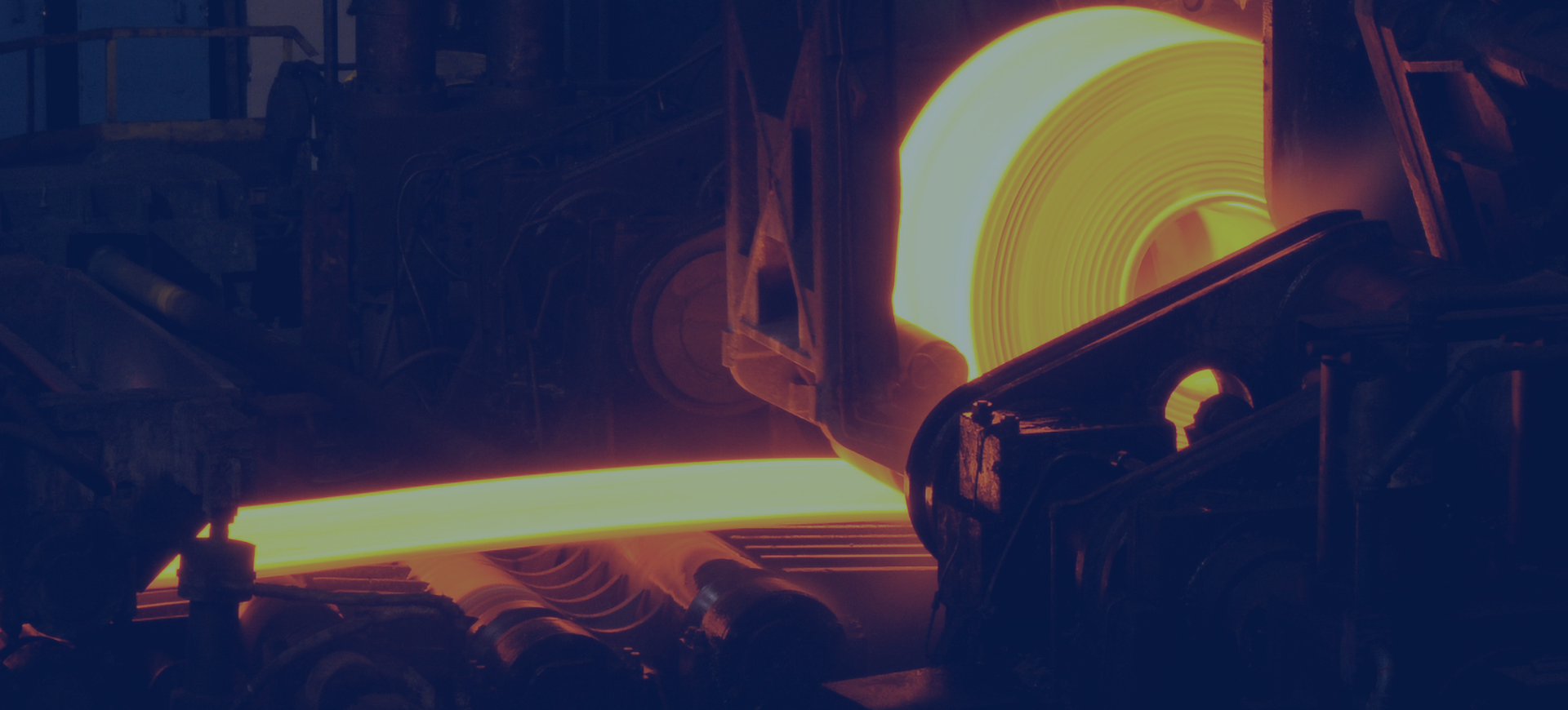
Where Does the 10mm Q235 Carbon Steel Wire Rod Fit Best?
For manufacturers and builders who work with round steel in coils, the Q235 10mm grade is one of the most ordered sizes in the wire rod trade — a workhorse Carbon Steel Wire Rod that draws into wire, straightens into building steel and machines into parts, all backed by a Shanghai supply chain group with four decades of history. ZZ Group, founded in the early 1980s and headquartered in Shanghai’s Yangpu District, keeps this gauge in regular stock for fabricators at home and importers overseas. What follows: where the 10mm Q235 fits best, what recent production changes mean, and how to judge the source behind the coil.
Understanding Wire Rod Basics
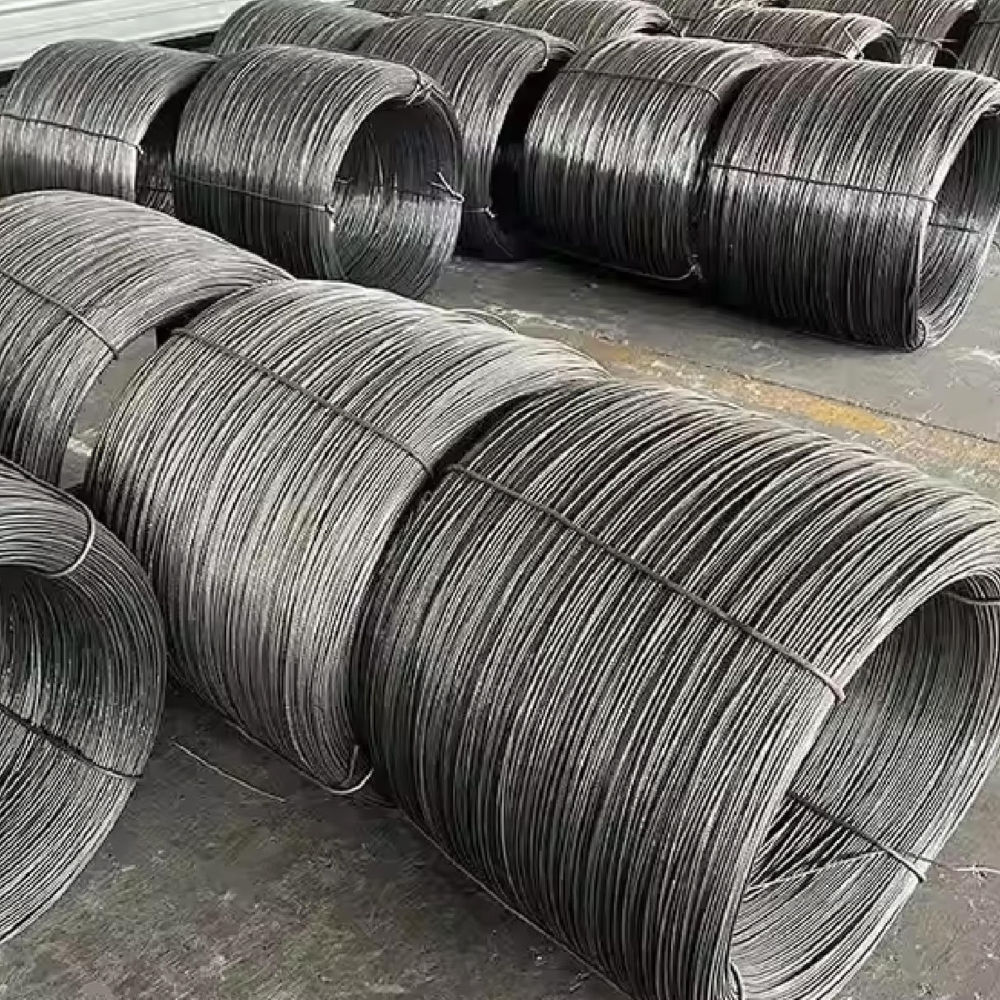
Put simply, wire rod is round steel of a relatively small diameter, delivered in coils. Low carbon grades are commonly known as soft wires; medium and high carbon grades go by the name hard wires. Most of the material is consumed at a drawbench as a drawing blank, but the same coil can also be used directly as a building material or machined into mechanical parts. The gauge range runs from 5.5mm to 18mm, and customized sizes are accepted on request — fabricators hate redesigning a product to fit a stock diameter. For a workshop turning this Hot Rolled Wire Rod into nails, mesh or shafts, the 10mm coil is a comfortable middle ground — thick enough to hold a profile, thin enough to feed through standard dies.
Specifications and Usage
The specification sheet reads plainly. Standards cover SAE1006-1080, Q195, WA1010, SWRH32-37, SWRH42A-77A and SWRH42B-82B; stock sizes sit at 5.5, 6.5, 8, 9, 10, 11, 12 and 13mm; and each package weighs 1.9 to 2.3 tons, arranged according to request. One honest caveat is worth repeating to any new customer: the 6, 8, 10 and 12mm gauges are mostly low carbon steel, not intended as main reinforcement in reinforced concrete. Their everyday jobs are steel sleeves and the small-diameter “brick reinforcement” used in brick-concrete structures.
Handling and Processing
What happens after the coil leaves the warehouse matters as much as the grade. This Hot Rolled Wire Rod is straightened and cut with a steel bar straightening machine, a pass that also knocks off oxide scale and improves strength to some degree through repeated bending and stretching. On a small site without such a machine, a hoist is not advisable — it produces too much plastic deformation; the accepted practice is to hammer one end with a pulley and control the pulling force. These small habits separate a clean length of Carbon Steel Wire Rod from a bent one, and most crews learn them the hard way.
Product Diversity: Carbon vs. Stainless
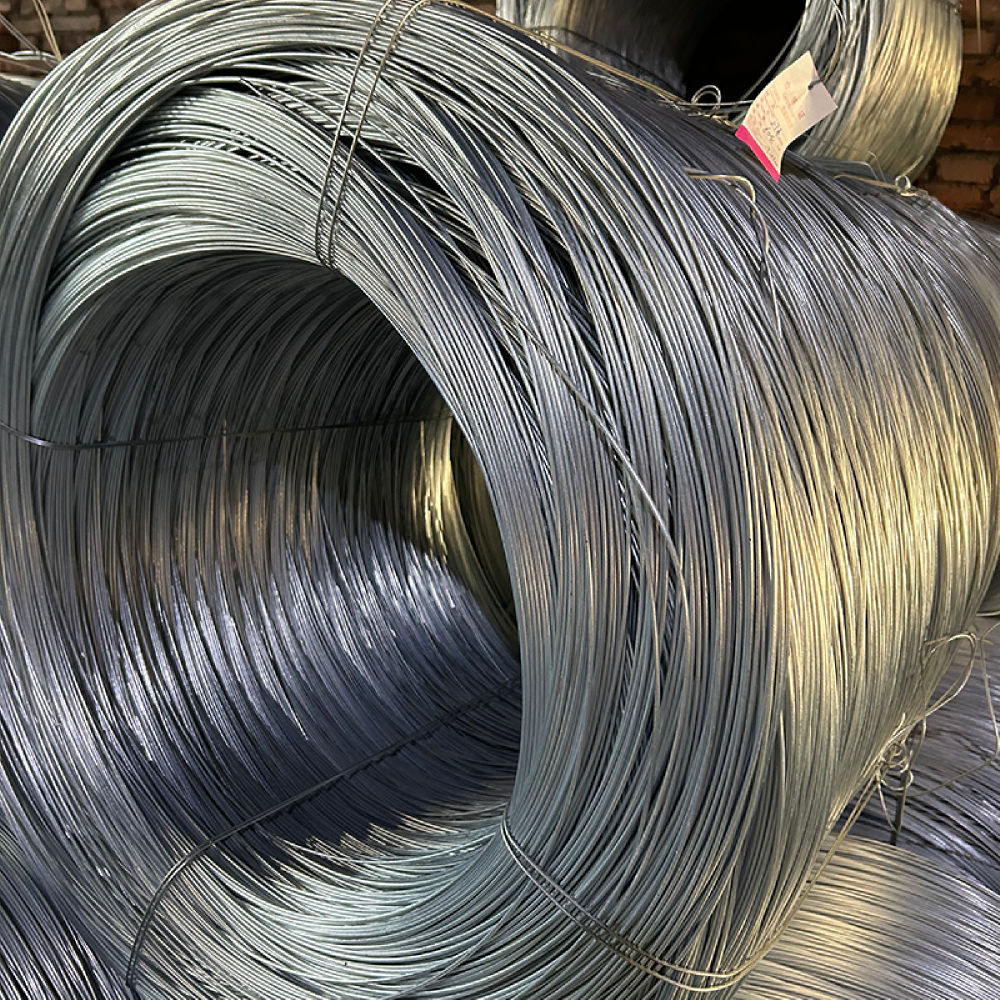
The stainless branch runs on a different track. Stainless steel wire rods become stainless steel wire, stainless spring wire, stainless upsetting wire and steel wire for stainless steel wire rope. Demand for Alloy Steel Wire Rods follows the fastener and wire rope trades, which tolerate little in the way of surface defects, so those orders hold up even when general construction slows. Carbon Steel Wire Rod, by contrast, stays tied to building and general machining. A supplier that carries both sides of the product family, as ZZ Group does, can quote whichever line fits the job.
Modern Production Standards
Production methods have changed more than most buyers realize. Special-shaped sections — square, hexagonal, fan-shaped — are now routine. The upper diameter limit has been pushed to 38mm, and coil weight has climbed from the old 40-60kg level to 3000kg. The biggest gain comes from new heat treatment after rolling: scale on the rod surface drops noticeably, and the microstructure and mechanical properties improve with it. For a drawbench, that means less descaling time and a cleaner finished wire from every coil of Hot Rolled Wire Rod. Buyers who last ordered a decade ago often assume they know the material; today’s product behaves better than the one they remember.
Corporate Strength and Reliability
The supplier behind those coils is an operation big enough to matter. ZZ Group carries a registered capital of 200 million RMB, is counted among China’s leading metal materials industry enterprises, holds the national steel trade and logistics “Hundred good faith enterprise” title, and appears on the “Top 100 private enterprises in Shanghai” list. Outside pure trade, the group runs steel processing and distribution centers in Shanghai and Quanzhou, holds shares in real estate ventures and invests in large financial groups — all built around the core steel business.
The scale is easy to measure: 20+ subsidiary companies and storages, six factories, over 1,500 employees, annual steel sales above 4.5 million tons and annual sales income over 2.7 billion USD. The group acts as an agent for mills such as Baosteel, Anshan Steel, Shougang Group, Benxi Steel Group, Hebei Iron & Steel Group, Jiuquan Iron & Steel Group and Liuzhou Iron and Steel, and serves some forty thousand companies — Gree, Midea, Geely, Volkswagen, XCMG, LONKING, YULONG STEEL PIPE and Himin among them — across processing machinery, steel structure engineering, environmental protection, equipment manufacturing, electric power engineering, automobile and shipbuilding. Coils, plates, H-beams, ship plate and Alloy Steel Wire Rods all sit inside that portfolio.
Market Expertise and Pricing
Longevity is part of the record. ZZ Group started in 1982 collecting steel scraps and recyclable materials for the automobile industry, moved into China’s north-west market in 1989 as a mill agent, and by 2005 had built its own steel trade, process and distribution system out of Shanghai. A transformation followed in 2007, an upgrade in 2019 with deeper training and talent recruitment, and in 2021 the group began segmenting customers, improving terminal quality and extending technical services. Four decades of steady steps make it a safer bet than a newly registered trader.
Importers get practical extras on top. Because finished products are supplied directly, no trading layer sits between the source and the shipment, and buyers feel that difference in the Steel Wire Rod Price. ZZ Group can also act for import customs clearance and knows the Philippine market well, having served many customers there. For a first-time buyer in Southeast Asia, that combination usually shortens both the paperwork and the learning curve.
On pricing, a few variables move the Steel Wire Rod Price: grade, gauge, volume and destination. A 10mm coil in Q195 quotes differently from one in SAE1008, and freight shifts with tonnage and port. Because ZZ Group sells directly, the number the buyer receives sits close to the source rather than carrying a trader’s markup, with lead times and port charges folded in. The first step is simple: send the grade, gauge, quantity and delivery port, and the sales desk comes back with a quote.
So where does the 10mm Q235 fit best? Wherever a proven, low-cost coil is needed — steel sleeves, brick reinforcement, drawn wire, machined parts — backed by a supplier that has moved steel for four decades and sells it directly. The grade is not exotic and never claims to be, and neither is the demand pattern: Alloy Steel Wire Rods chase the fastener and wire rope trades while the carbon line follows construction and machining. What ZZ Group adds is reliable supply, honest specifications and a fair Steel Wire Rod Price, which is usually all a buyer really wants.
Post time: Sep-16-2026


